Story by William Whisler
Photos by Luke Milhimes
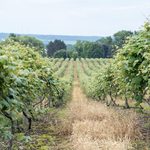
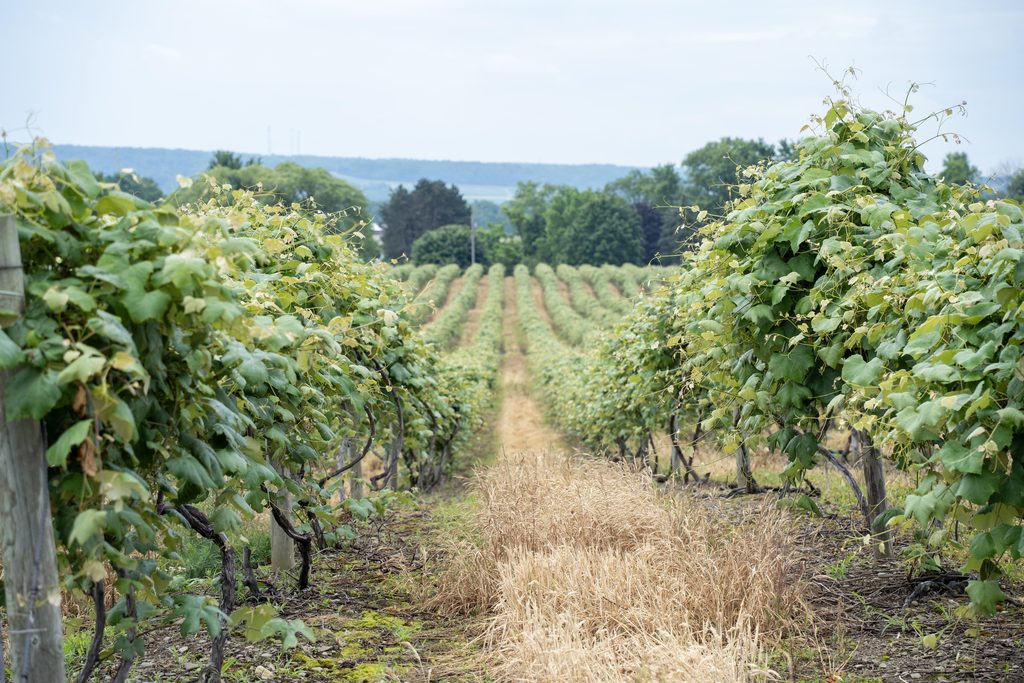
For generations, Concord grapes have been woven into the agricultural identity of North East, Pennsylvania, in Erie County. The vineyards that stretch across the Lake Erie region have an economic impact of more than $274 million and the region produces more than 80 percent of the state’s grapes, the majority of which grow Concord grapes.
The vines represent family operations with long-term investments and a way of life built around a perennial crop that takes years to establish and requires constant care.
But a vineyard is only as valuable as the market waiting at the end of the growing season.
In March, 126 grape growers in the Lake Erie Grape Belt in Pennsylvania and New York received a letter notifying them that Refresco was ending their contracts with them, effective immediately, leaving them with acres of grapes with no home.
For North East growers, including Mark Terrell, Sam Valone and the Labowski family, the loss of their contracts has left them with an unsettling reality.
Their farms are different in size and history. The Labowskis manage 18 acres of Concord grapes and an additional 3.5 acres of wine grapes. Terrell farms 200 acres and had roughly 1,600 tons of grapes destined for Refresco each year. Valone has spent years building an operation around Concord grapes and recently expanded his acreage under the assumption that he had a market for his product.
Now, all three are confronting the same question:
What do you do with a vineyard when you have no one to buy the grapes?
Six months later, not much has changed.
For the Labowskis, the answer is not immediately clear.
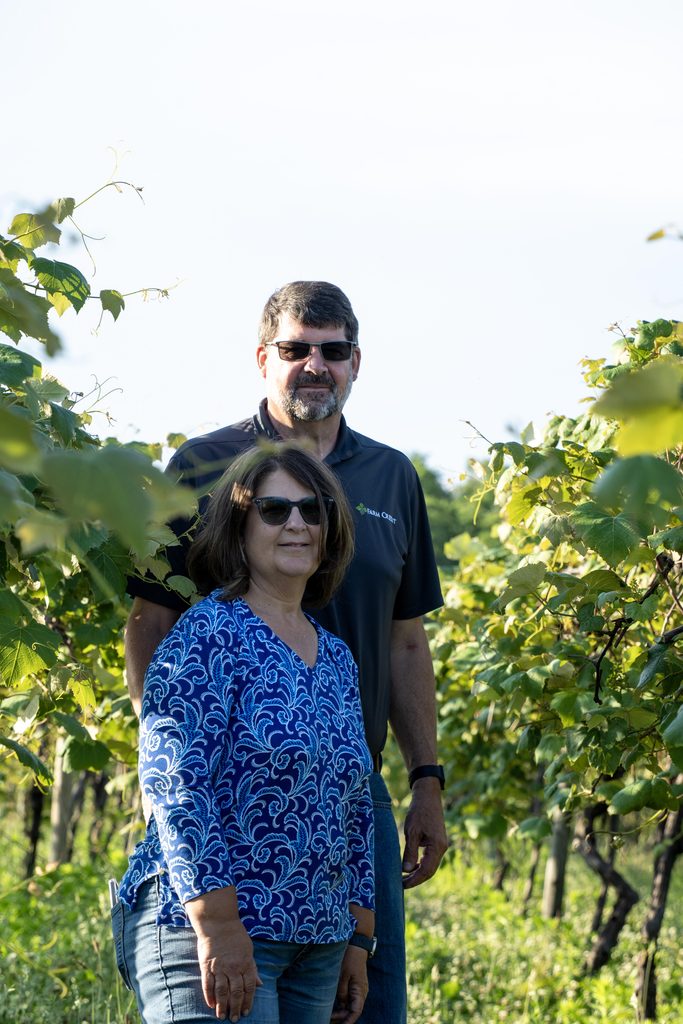
“We’ve got 18 acres of Concord grapes that don’t have a home,” Anna-Marie Labowski said. “Even though they don’t have a home, you have to take care of them, or they’re going to be a mess.”
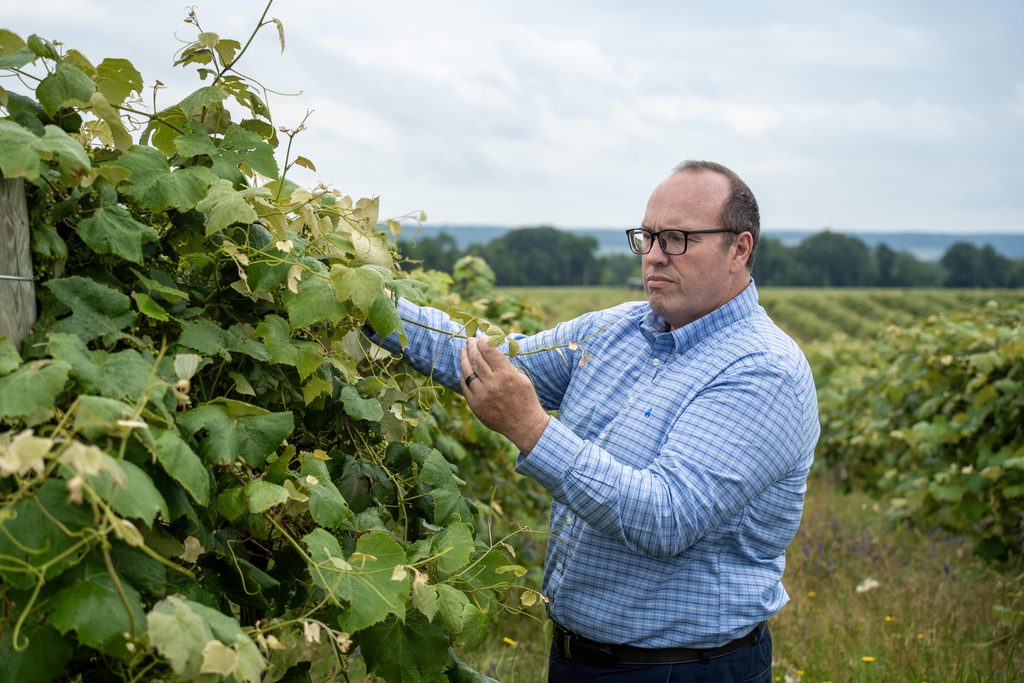
That is the paradox facing growers throughout the region. Grapevines cannot simply be turned off because the market disappears. They are perennial crops that require management year after year, regardless of whether the farmer has a contract.
And maintaining them costs money.
The Labowskis have already begun making difficult decisions about how much to invest in their vineyard. Spraying, for example, is an essential part of maintaining healthy vines, but each application carries a price tag.
“Normally I would have at least two sprays on,” Larry Labowski said in late June. “I only have one on. I’m ready to put my second one on. Normally, I’d be putting my third one on at this time of year.”
The family also faced difficult decisions when it came to pruning. Mechanical trimming initially appeared to be a way to reduce labor costs, but the equipment did not adequately reach the center of their double-curtain vines.
“We looked at our grapes after they were mechanically trimmed and said, ‘These are a disaster,’” Anna-Marie said.
They ultimately hired a crew to hand-trim part of the vineyard – another expense added to a crop with no buyer. That is what makes the current situation so difficult for growers – the costs do not disappear when the market does.
A crop that can’t simply wait
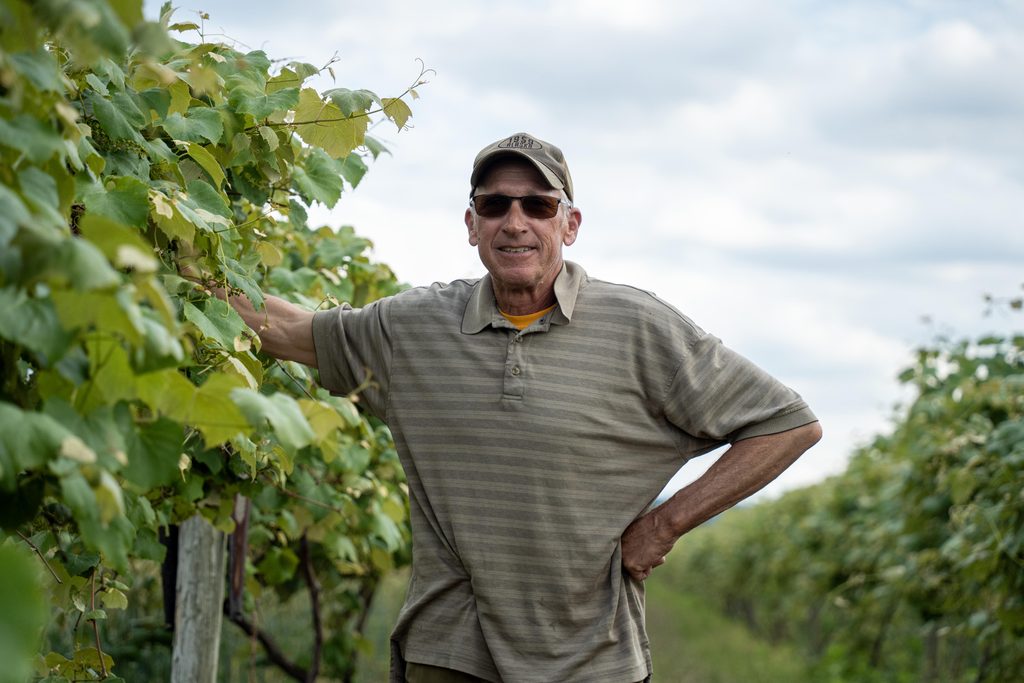
Terrell understands that problem on a much larger scale.
His 200-acre vineyard had been entirely under contract with Refresco since 2021. The arrangement gave him a reliable destination for approximately 1,600 tons of grapes annually.
Then the contract disappeared.
“I’ve been growing grapes since 2009 and have been with Refresco since 2021, and the news was devastating,” Terrell said. “I had my whole 200-acre farm contracted entirely with them and given the state of the grape market right now, I’ve tried multiple times with multiple processors, and there’s just no market, no buyer for excess grapes right now.”
Terrell has been forced to shift from producing grapes for maximum yield to simply keeping his operation alive. He has cut back on fertilizer application, reduced sprays and was forced to lay off employees who worked for him for years.
“It’s all about survival. For me, that’s letting my employees that have worked for me for years go, since I can’t afford payroll,” Terrell said. “I’m not putting on sprays like I should be and things. So, it’s purely putting the farm in idle so that I hopefully can squeak by this year. The problem is longer you go keeping it idle, the worse health the vines get into, and then there’s going to be carryover effects for several years before you get them back to being healthy and fully productive again.”
That creates a cruel cycle. Growers must cut costs because there is no market, but cutting costs can damage the vines they need if the market returns, and if a contract does return, Terrell expects the economics to be challenging.
“The other issue is even if there’s a contract, prices are likely to be low, and so you’re going to need high productivity to cover your input costs,” Terrell said.
The scale of his operation also makes finding another buyer nearly impossible.
“I’ve tried to reach out to some wineries and stuff, but if it’s a few tons here and a few tons there, it’s not going to make up the difference than what a global-size processor purchases,” Terrell said.
The same challenge exists across the region for impacted growers.
“These aren’t small, half-acre vineyards scattered throughout the state,” Terrell said. “There’s 5,000 acres just in a few miles in this one region and think of the amount of tonnage that that produces.”
That concentration makes the loss of a major processor especially consequential. When a large buyer steps away, there simply aren’t enough smaller markets to absorb the crop.
Investments built on promises
For Valone, the loss of the Refresco contract has been especially painful because he had spent years investing in the future of his vineyard based on the belief the market would remain.
At one point, his operation had reached 165 acres in production with a 1,200-ton contract. As the market deteriorated, he reduced his acreage.
Then Refresco changed the equation.
Prices improved, giving Valone confidence that commercial Concord grapes could once again provide a viable future. He began leasing and purchasing additional vineyard ground.
Six years ago, he bought 42 acres that he described as being in terrible condition and invested heavily in the land to restore it.
“It was a wreck,” Valone said. “But it was absolutely in the heart of the heart of the Grape Belt. It is the best Concord grape property on the planet.”
He planted roughly 12,000 new vines and spent years rebuilding the property. More recently, he purchased another 23 acres after receiving assurances that the acreage had a Refresco contract.
“Are you going to give me a Refresco contract?” Valone recalled asking.
“Yes, we are,” he was told.
There was no contract in writing. Months later, the answer changed.
“In March, they threw me under the bus,” Valone said. “What a punch in the gut. It was so underhanded.”
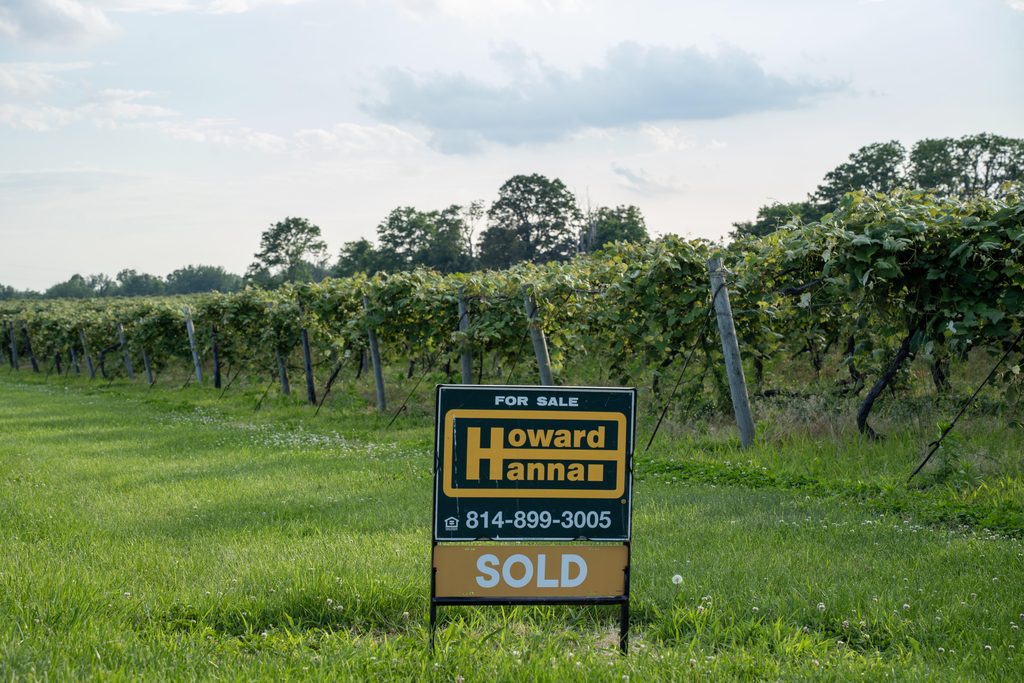
The consequences were devastating. Valone has since sold the property that he spent multiple years working to revive.
“I was going to be making profits on 130 acres of grapes,” he said. “Now I’m down to 85 acres with no profit in sight.”
For a farmer who viewed those acres as part of his retirement plan, the loss goes beyond a failed business calculation.
“I’m disappointed I had to sell those 42 acres. I’m devastated,” Valone said. “It was a dream to get that property and then put two more pieces beside it, 85 acres all in one spot.”
No easy way out
All three growers face the same dilemma: There are no realistic alternatives.
The Labowskis could consider utilizing an idle season to convert their vineyard from a double-curtain system to a single-curtain system, potentially making the operation more efficient. But the estimated $1,000-per-acre cost makes it a steep investment.
“And I’m looking at it and saying, do we want to convert this vineyard to single curtain when three or five years from now we still might not have a market?” Anna-Marie said.
Valone has considered other crops and ways to generate income from his property, but there is no easy replacement for the scale of his grape operation.
“I need 200 acres of profit,” he said.
For Terrell, the uncertainty has reached the point where he is considering getting out of the grape business if a contract does not return quickly.
“I think if I don’t get a contract next year, I’ve got to really start thinking hard about an exit strategy,” he said. “And again, I’ve thought about it, but I don’t know what that looks like.”
Valone has already taken steps in that direction.
“If the market doesn’t turn, my best hope of surviving is being able to market those two pieces of real estate,” Valone said. “If I do one a year, it probably keeps the wolves away.”
But selling land only buys time.
“All that does is get rid of mortgages that I just got and haven’t been able to pay down,” Valone said. “It’s going to eat into my equity.”
Waiting for a market
Behind the individual struggles of the three farms is a larger concern for the future of the region’s Concord grape industry.
The loss of their contracts is not simply the loss of a sale. It affects labor, equipment, crop health, land values and long-term investment decisions. It also undermines one of the fundamental principles of farming: planning ahead.
Terrell is trying to remain optimistic but recognizes that the future is largely beyond his control.
“I try to stay positive,” Terrell said. “But it’s not up to me.”
And Valone, after years of investing in his vineyards, is watching an industry he once believed could support future generations become increasingly difficult to navigate.
The growers’ circumstances differ, but their message is remarkably similar: Without contracts, their vineyards are quite costly.
That may be the most consequential reality facing the region’s grape growers who had contracts with Refresco. The vines are still growing. The land is still productive. Farmers are still willing to work.
But without a market, none of that is enough and the clock is ticking. They can maintain the vines for a while, hoping the market turns around. They can cut expenses, reduce labor and postpone investments.
But eventually, something has to give.
The Labowskis perhaps put the dilemma most simply.
“We’re just kind of playing a waiting game,” Larry said. “What’s our other option?”
For now, the vines remain. And they wait, with no light at the end of the tunnel.
-30-
Pennsylvania Farm Bureau is the state’s largest farm organization, representing farms of every size and commodity across Pennsylvania.
Latest PFB News

Search News Stories:
Learn About Farm Bureau