Story by Will Whisler
Photos by Will Whisler and Luke Milhimes
In Southern York County, Barron Shaw was preparing his Stewartstown orchard for some cold temperatures that were anticipated the night of April 21st.
Shaw had gathered some pushed out apple trees from a few seasons ago and had them nicely bunched in piles on a low point of the orchard to burn on a cold night. His thought process was to try to keep his orchard warm enough from the fires to help his fruit bearing trees that were in the process of blooming, fight off a late April freeze. Shaw set out around 11 p.m. on the night of April 21st and began burning the old branches in a row of five or six piles.
“We needed to burn the piles anyway, so we saved them for a cold night,” Shaw said. “We tried to burn them on the 21st, in the hope that the heat that came off these piles would linger over the valley, but it did not appear to work very well. We started some of the piles around 11 p.m. and then we pushed them all in and added a few more piles around 5 a.m.”
At first, Shaw wasn’t particularly worried. His orchard had just survived freezing temperatures two weeks prior, and Shaw Orchards seemed to be in good shape for another successful year of providing fresh, local fruit to its community.
Four consecutive days of mid 80s heat that occurred April 13-16 threw a wrench in those plans. The warm spell, which peaked on April 16th, the warmest day of the year in York County at 88 degrees, tricked fruit bearing trees at Shaw Orchards – and orchards across the Mid-Atlantic – into throwing blooms in mid-April, which made freezing temperatures on April 21st so devastating for the industry.
Temperatures dipped to as low as 24 degrees in parts of York County that night, a temperature lower than most fruits can survive after beginning to bloom. The lowest temperature occurred on April 8th at 21 degrees, giving Shaw hope that if his crop survived that, it could survive April 21st as well.
“We had record high temperatures the week before and record sunny days. All the apples bloomed at the same time,” Shaw said. “They were so excited to finally shed winter and have a bloom. Everything was pretty much over in four or five days. Then two days later, we had this near record cold.”
A day later, Shaw went out to inspect his orchard and found himself scratching his head.
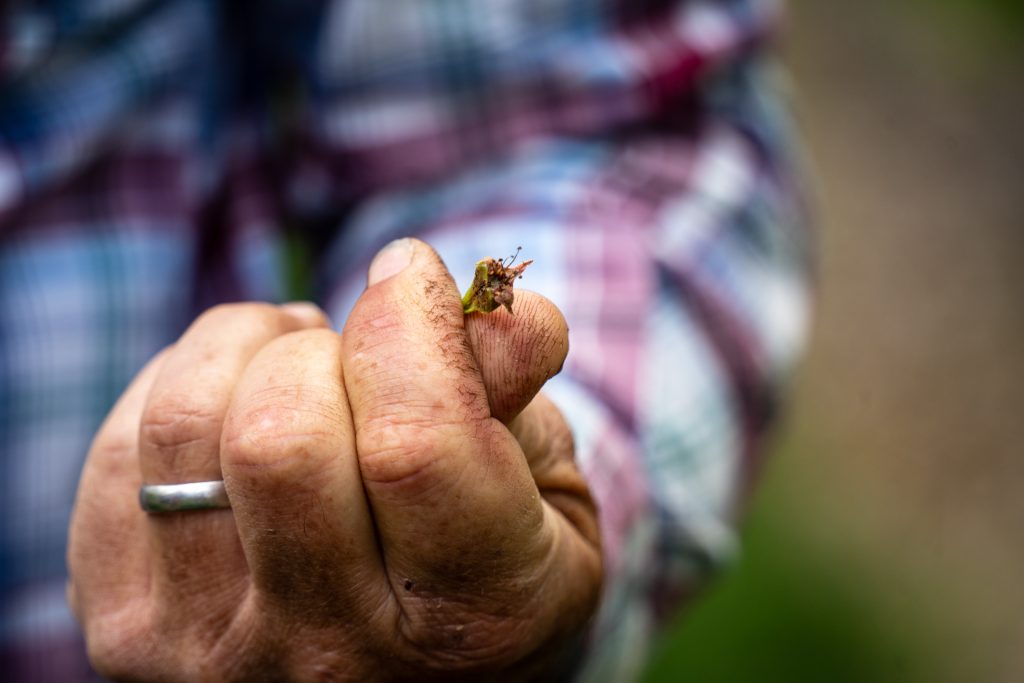
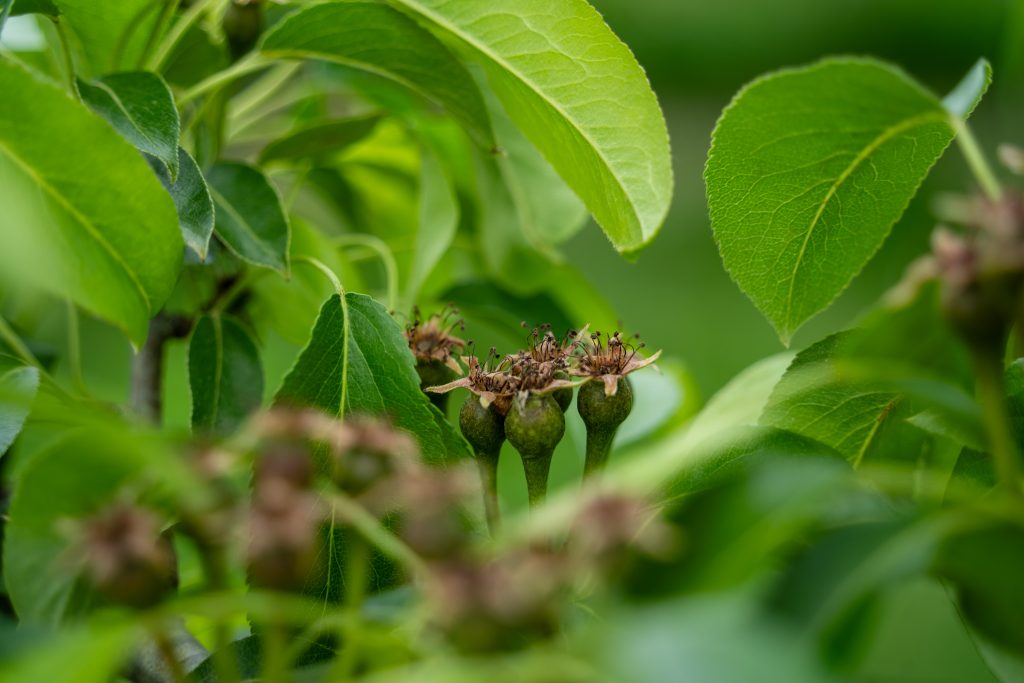
“Conventional wisdom tells you that it takes about 24 hours before you can begin to look at the damage. It was about 24 hours later, and I started cutting some buds and I saw significant damage,” Shaw said. “I, like most of the growers, was in disbelief, honestly. I couldn’t believe that the damage was as bad for as cold as it was. As time goes on, we get more and more confident in saying that we have a major catastrophe.”
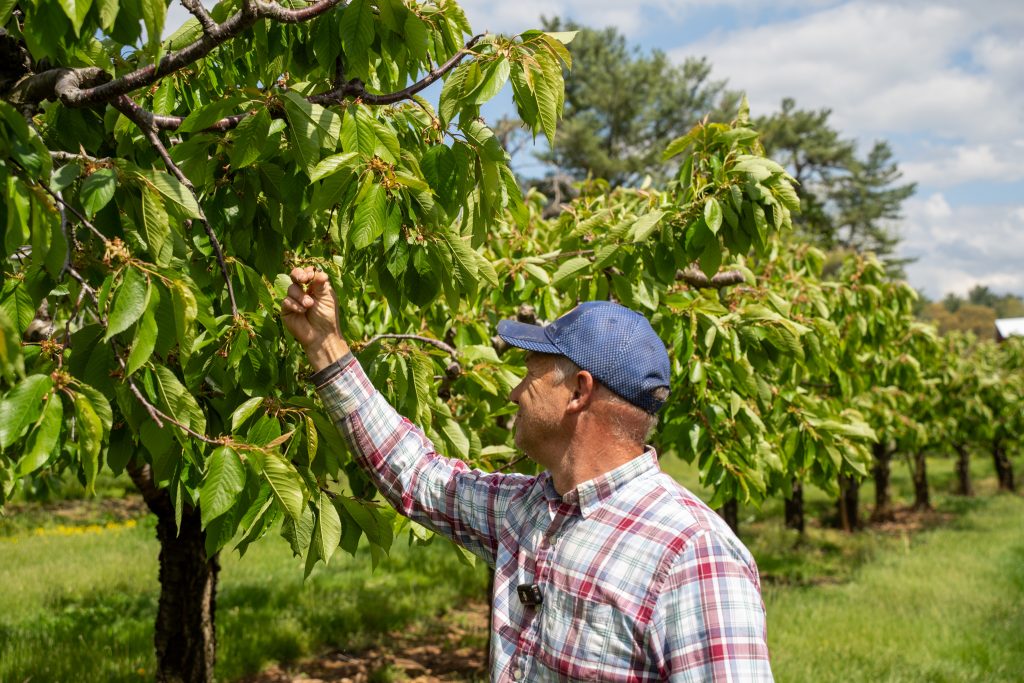
Shaw is a fourth-generation fruit grower in Southern York County. Shaw Orchards was established in 1909, with the land belonging to Shaw’s family since the 1830s. The orchard has been home to many kinds of fruits, including apples, peaches, pears, plums, cherries and apricots, in addition to various kinds of berries, pumpkins and grapes.
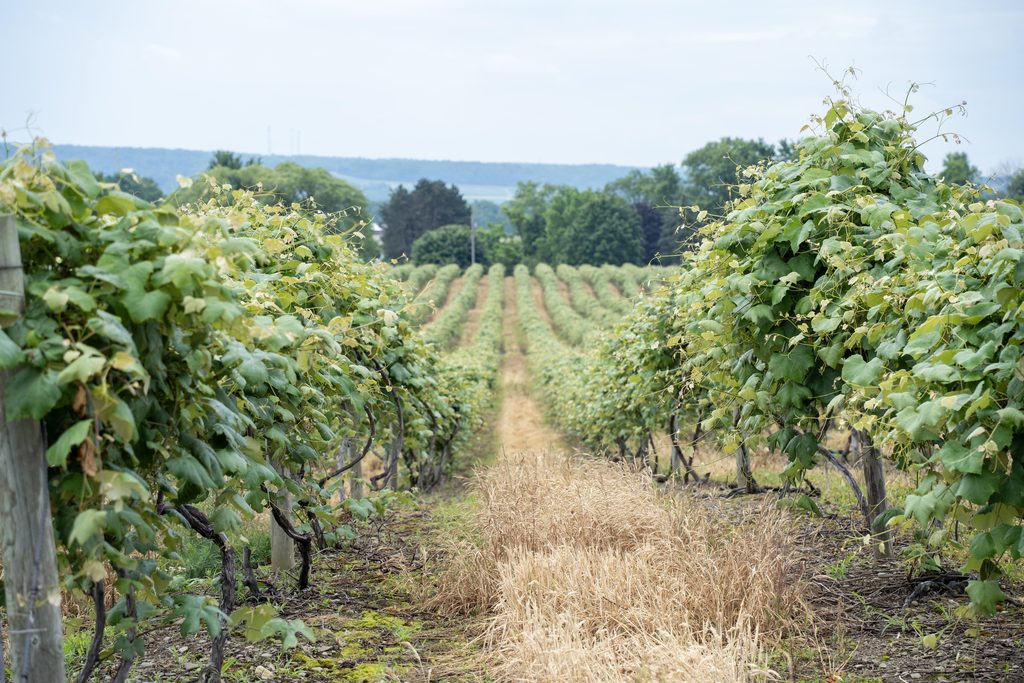
For as long as Shaw, or anyone in the family can remember, they’ve never experienced a loss as significant as the one they are set to endure over the next few months. His orchard has experienced severe damage to its tree crops and grapes, with several crops expected to be a complete loss.
“Since 1909, we’ve never had a year where we’ve lost everything to a freeze,” Shaw said. “It’s usually one fruit or another and the more fruits and berries that you grow and the more diversified you are, the more secure you are. It didn’t seem to help this year.”
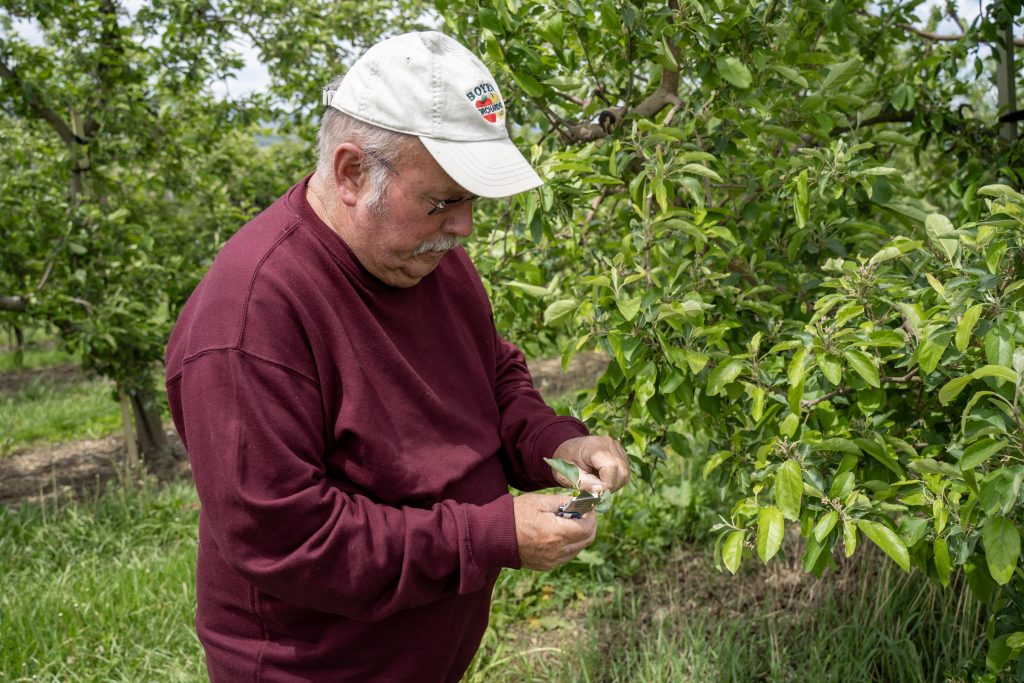
Boyer Orchards
In Bedford County, Boyer Orchards experienced a similar fate. The New Paris orchard, owned and operated by Matt Boyer and his family, experienced devastating losses to their apple, peaches and pears. Boyer has 360 acres of apples that he sells to a packer and direct to customers in his market, as well as 10 acres each of peaches and pears to supply their market.
Boyer expects that he’s going to experience a total loss on peaches and pears and could lose about 90 percent of the apples he expected to have this year. Surges of warm weather put his orchard about six weeks ahead of schedule, leading to devastating losses.
“We had too many 80-degree days in March and April, and too many days where the nighttime temperatures were in the 60s and the fruit can’t help but go,” Boyer said. “The fruit was just jumping. Our rule of thumb is that we shouldn’t see green until the end of March, but it was the middle of March and they were out already. I told my wife – ‘this isn’t good.’ This is the worst year I’ve experienced in 47 years in the business.”
Boyer recalled that the polar vortex in 2020 killed most of his peach crop, but his apples survived that year. In the winter of 1994, Boyer’s peaches were wiped out by negative 24-degree temperatures, but his apples survived. As far as apples, Boyer has never experienced a year as devastating as 2026.
The Boyers also took preventative measures to try to protect their crops. They deployed the usage of smudge pots on two separate occasions, something he said he might use about once a year, if at all. After spending about $4,000 on diesel fuel to try to save his plums, Boyer said he has questioned if it was the right decision.
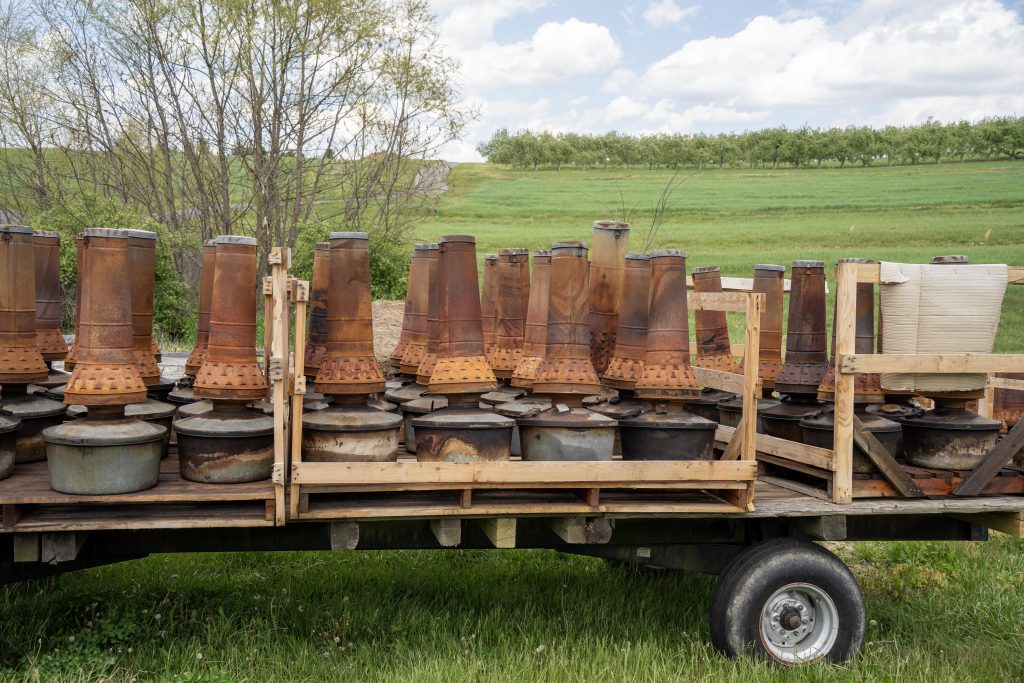
Boyer also grows some later seasonal varieties of apples, including Pink Lady and EverCrisp apples, but he noted that they were six weeks ahead of schedule and probably won’t survive.
“We normally pick those apples later in November, so with them six weeks ahead we were looking at October,” Boyer said. “They bloomed right away, so they aren’t do any better than our Galas. There are no shining stars that beat the freeze.”
Boyer’s hope is that some of the apples in the back part of his orchard might have a chance to survive.
“There was a block of apples we had that didn’t come on as fast, so if they were behind in the bloom, there’s a chance that they did make it. So, we’re keeping our fingers crossed,” Boyer said. “But that’s the minority. We’re just hoping we have enough for our market this fall because we do really well with that.”
Additional Losses
In addition to the loss of their crop, fruit growers are also saddled with additional expenses to maintain what is left of an already poor yield.
Fruit growers will still be tasked with deciding how much spray to use without negatively impacting next year’s growing season, how to maintain their foreign and domestic labor and how to pivot into more long-term maintenance projects on the orchards from typical seasonal chores.
“All these trees have to be sprayed all summer long just to prevent diseases that would impact their fruitfulness next year,” Shaw said. “We don’t have the luxury of walking away from these trees all summer long. They still need a lot of care. We’re going to have to continue to invest in them, whether we make any money on them or not this year.”
Both Shaw and Boyer utilize an H-2A workforce, which creates an added cost of labor.
“At some point, it becomes uneconomical to take care of it. At what stage do you put a lot of money into the last piece of fruit that is in the orchard? That makes it pretty hard,” Shaw said. “The trees will grow hard this year – we will have more bills for pruning because they will put on more wood than they normally would, but they should have a good crop next year if we do everything right this year.”
Measuring the Losses
Following the April 21st freeze, Pennsylvania Farm Bureau put together a survey that was open for two weeks to try to get a feel for just how devastating the losses were for fruit growers across the Commonwealth. The results were staggering:
250 total respondents
221 who reported that they were negatively impacted by the freezing temperatures
Primarily impacted growers were fruit growers (Apples, Grapes, Peaches, Pears, Plums, Cherries, Apricots, etc.)
Other commodities impacted included Christmas trees, alfalfa hay, barley and rye.
Of the 221 respondents who reported damage:
13 percent reported a loss of 10 percent or less
87 percent reported a loss of at least 25 percent
65 percent reported a loss of at least 75 percent
29 percent reported a total crop loss
Of the 221 individuals who reported damage, 125 provided a dollar figure for their losses. The net losses of those 125 people added up to $43.7 million.
The Pennsylvania Department of Agriculture’s early estimates put fruit growers at a loss of $150-$200 million statewide.
Disaster Declaration
On May 8th, Pennsylvania Governor Josh Shapiro and Pennsylvania Secretary of Agriculture Russell Redding visited Cherry Hill Orchards in Lancaster County to meet with growers who were impacted by the devastating freeze.
Following the event, Pennsylvania Farm Bureau joined Governor Shapiro, the Department of Agriculture and other industry stakeholders in sending letters to USDA Secretary Brooke Rollins to ask for a statewide disaster declaration for fruit growers who have endured unbelievable losses to their 2026 yield.
“April 21 is really a day that will define the fruit industry in Pennsylvania for 2026,” Secretary Redding said at Cherry Hill Orchards on May 8. “Everything we do from this point forward is defined by that day. We have heard from our growers and from stakeholders. We continue to work at getting a better handle on the extent of the damage, but we have heard very clearly that the loss is staggering. It’s very different, it’s serious and unparalleled in its damages compared to previous losses.”
What’s Next
In the meantime, many fruit growers will have to be creative to find a way to survive beyond this season.
“I think what is important for people to understand is that it is not easy to cut variable expenses,” Shaw said. “Most fruit growers are going to try to come up with something that they can grow on a one-year basis to turn a little bit of a profit. The problem is that most of those things are already pretty well established out in the market and the price of them is going to be pretty low anyway.”
For Shaw, he thinks his apples, which he normally strives for 1,000 bushels per acre, could possibly return 100 bushels per acre – if he’s lucky. Still, He’s expecting to have a good strawberry and blueberry crop that could help him this summer.
“We are hoping that we will have a blueberry crop. After the freeze, these were already in bloom and we could see that a lot of them were obviously dead, but since then more buds have started to open up and I am hopeful that some of this later stuff will actually make it,” Shaw said. “They took some damage, no doubt about it. But they throw so many blooms, both blueberries and strawberries, and it’s usually over a pretty good amount of time that I think we will have something to sell. It may not be a bumper crop, but I think people are going to be very happy with the quality.”
Shaw also remains hopeful that he may have some Gala apples this year.
“There were a few blossoms that we could see on our Gala apples that might make fruit,” Shaw said. “We are hopeful that maybe a secondary bloom might give us a little bit of a yield and something that we can sell in our market.”
For Boyer, his hope is to maintain foot traffic with pumpkins, winter squash and sweet corn.
“We do have a pretty good pumpkin and winter squash trade,” Boyer said. “I usually have sweet corn, which I normally plant with the peaches but at this rate, I’ll have to plant it in June sometime so it might not mature until October or something, but we do fairly well with sweet corn too.”
Boyer explained that his business is still thriving on last year’s harvest and it will be this time next year when he’s truly feeling all the pain from this April’s freeze.
“We had about 200,000 bushels last year and our packer still owes us for about a quarter of that, so right now we still have last year’s money coming in – it’s next year at this time that we’re going to be bare bones,” Boyer said. “Our two biggest expenses are our labor and spray bills. We can probably get by on last year’s money for this year, but it will be the following year that we will really feel it.”
-30-
Pennsylvania Farm Bureau is the state’s largest farm organization, representing farms of every size and commodity across Pennsylvania.
Latest PFB News
Search News Stories:
Learn About Farm Bureau